Our Pedagogy
Four lenses, one way of teaching
Four philosophical approaches form lenses which shape our practice. These approaches have evolved through many years of research and strive to provide learning environments in which young children thrive.
Nature Pedagogy / Boodja (country) School
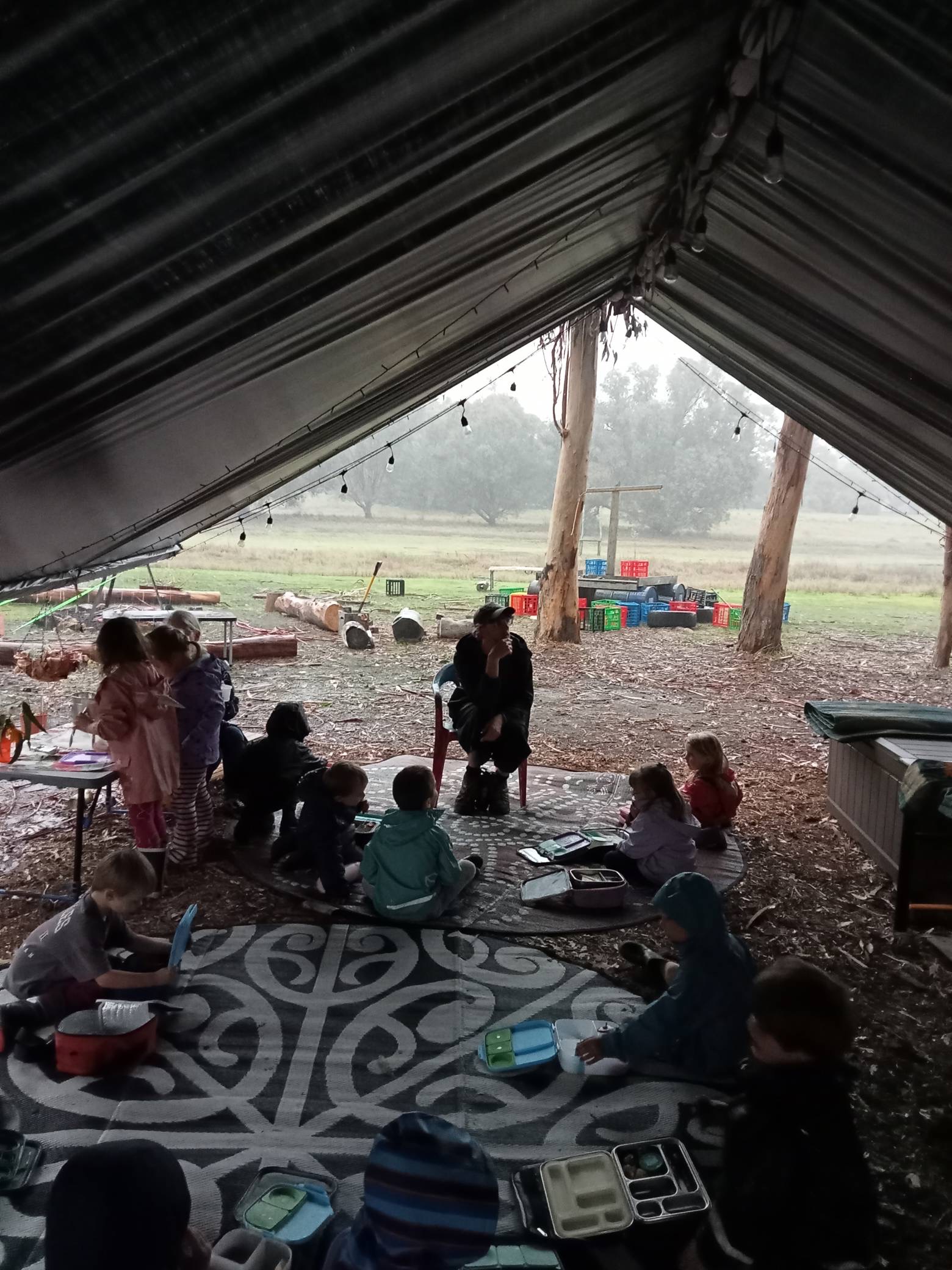
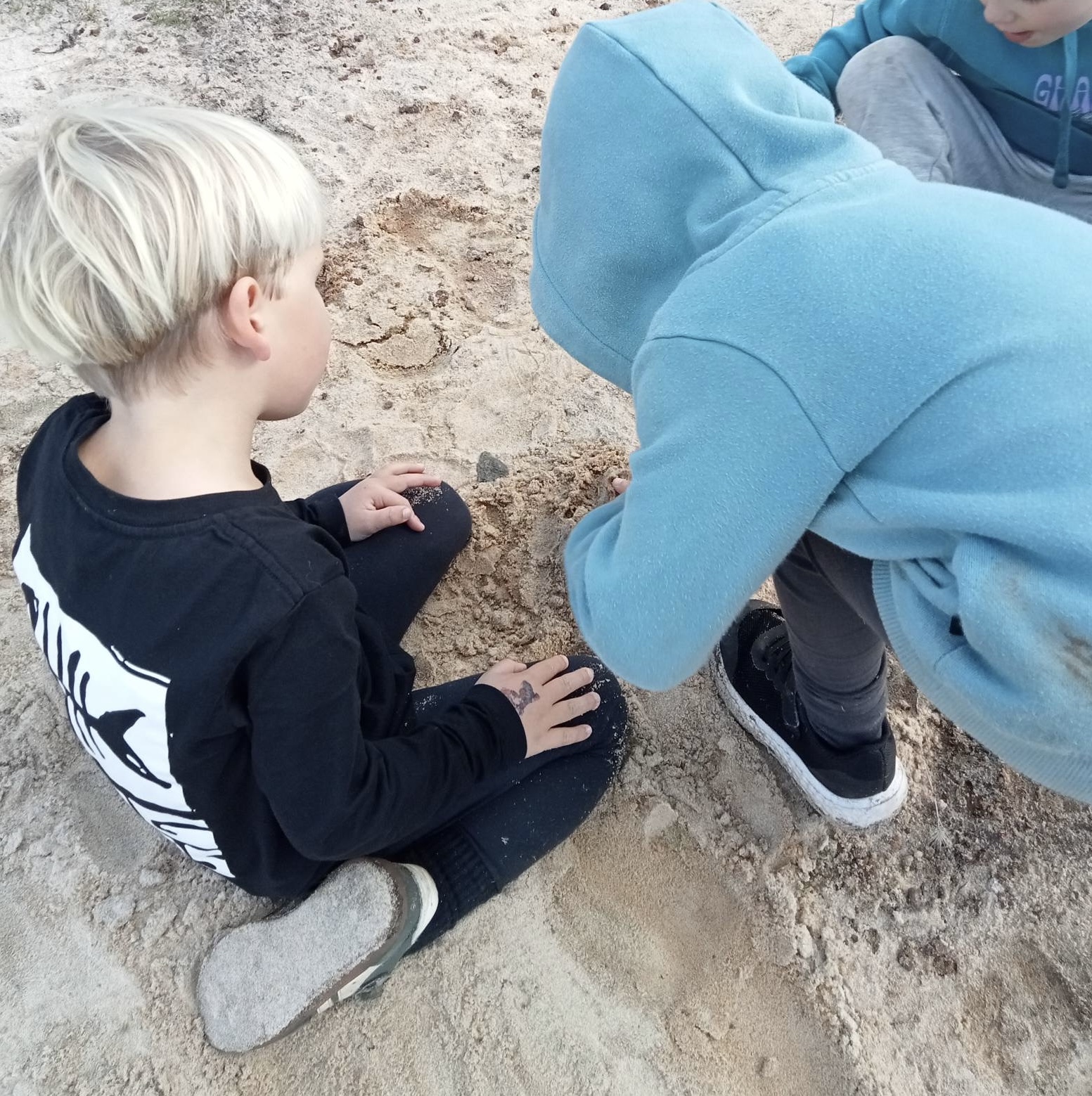
Outdoors is our default classroom. Children learn through embodied, sensory, weather-touched experience: climbing, balancing, digging, pouring, watching, listening. Risk is reframed as risk-benefit - children meet real challenges (fire, sharp tools, height, distance) with progressive responsibility, scaffolding and trust. The seasons set the rhythm of the year.
Reggio-Inspired Emergent Inquiry
Children are competent protagonists of their own learning. Educators observe carefully, document what they see - photographs, transcripts, sketches, learning stories - and design provocations that extend children's thinking. Long-term projects ("progettazione") emerge from genuine curiosities and may run for weeks or a whole term.
First Nations Perspectives and Country as Teacher
This Country has been a place of teaching and learning for tens of thousands of years. The six Noongar seasons - Birak, Bunuru, Djeran, Makuru, Djilba, Kambarang - are the spine of our yearly cycle. We learn Noongar language for plants, animals and weather, and centre Country in every learning area.
Local indigenous peoples will be invited to be involved whenever possible.
Education for Human Flourishing
In 2025 the OECD released a conceptual framework that asks education to reach beyond academic achievement and workforce readiness toward something older and larger: human flourishing. Drawing on Aristotle, Ubuntu, Confucianism and contemporary positive psychology, it names five interdependent competencies that equip young people to live well, act with purpose, and contribute to flourishing communities and a flourishing planet. Each is already alive in our daily work on Country.
- Adaptive problem-solving
- Ethical reasoning
- Understanding the world
- Appreciating the world
- Acting in the world
Source: OECD, Education for Human Flourishing: A Conceptual Framework (2025)
The Eight Ways of First Nations Learning
A planning lens for every project
Alongside Reggio-inspired inquiry and nature pedagogy, our practice is shaped by the "Eight Aboriginal Ways of Learning" - used in respectful conversation with Wadandi and Noongar knowledge-holders of this place.
Story Sharing
We approach learning through narrative - stories around the fire, retellings of what children have seen.
Learning Maps
We make the path of learning visible. Children draw, sketch and map what they are doing and where they are going next.
Non-verbal
Watching, gesture, silence, dance, tracking and quiet attention are honoured as ways of knowing.
Symbols and Images
Finding the picture inside the concept before reaching for words. Images, metaphor and natural symbols hold ideas.
Land Links
Every learning area is grounded in the soil, water, weather, plants and animals of this place.
Non-linear
Lateral thinking, unexpected connections, holding more than one truth at once - weaving Western and First Nations ways of knowing.
Deconstruct / Reconstruct
Model the whole before the parts. Children take it apart and remake it at their own pace.
Community Links
Learning is for the good of the community - shared with families, neighbours, Elders and the wider district.
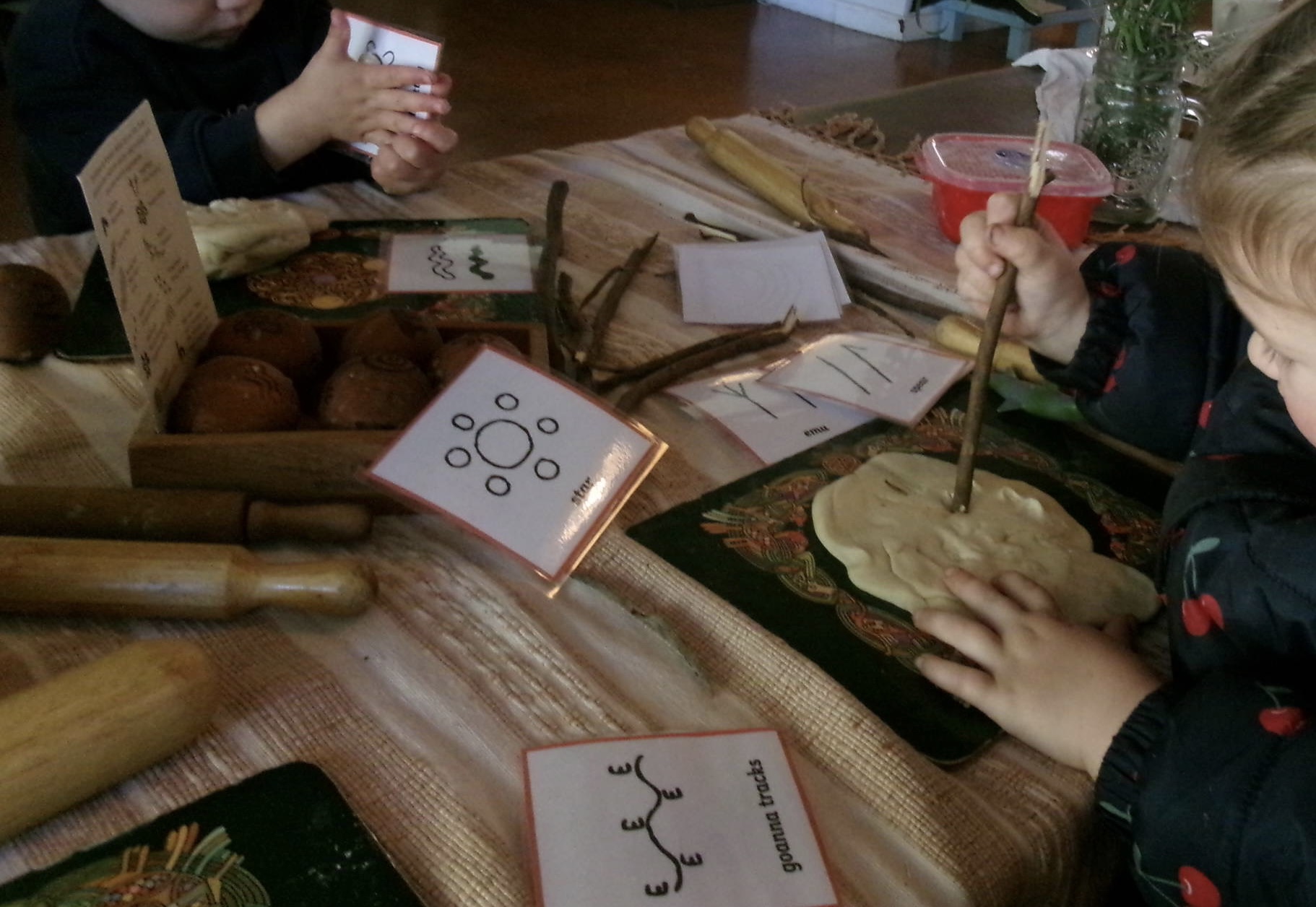
Children imprinting goanna tracks and Noongar symbols into clay - Story Sharing, Symbols and Images, Land Links in action